
HUMMINGBIRD SPREADS ITS WINGS
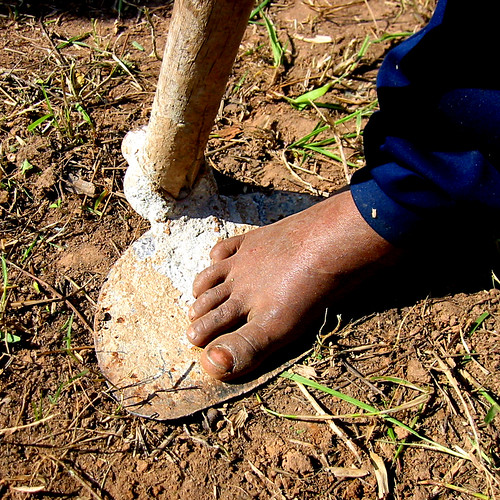
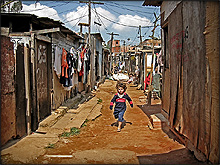
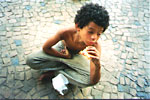
Clearing new terrain. - The hard-working foot of 7-year old José Roberto.
Taking Hummingbird to the community instead of the community coming to us
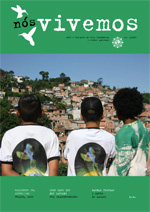
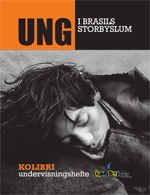
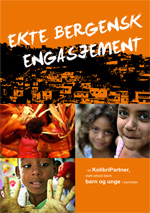
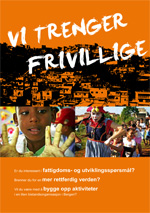
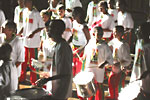
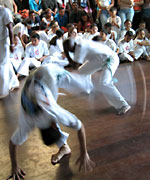
Last week was the start-off for a new development in the Hummingbird Project called Beija-Flor na Comunidade (Hummingbird in the Community), which literally means we took Hummingbird to the community instead of the community come to us. In other words, Hummingbird is spreading its wings! The programme is part of a new strategy being developed by our youth mentors to get a preliminary feel in connection with their objectives to implant small Hummingbird nuclei in the more distant parts of our community, thus bringing our activities to the poorest kids who have no means of reaching our main centre. The first community to be receiving some of Hummingbird’s vibrant activities was the Sitio Joaninha, which is a rough hilly area about 6 kilometres away from us, where many of the families who used to work on the rubbish tip live. The tip was closed down a few years ago and the area covered with topsoil so as to recuperate some of the natural vegetation. Most of the shanty homes were constructed during the active years of the tip, when entire families found their livelihoods under the most unhealthy and hazardous working conditions. Since its closure there has been very few alternatives in the way of work and habitation, so very few have been able to move to better conditions. To the contrary; the area has rapidly grown to accommodate even more poverty-stricken families who have no other alternative than to grab a small plot of land and try to survive on what little is available in terms of public amenities in such places. The majority of homes have no running water and depend on the council delivering drinking water by truck each day. Electricity is acquired through a series of illegal connections, which people have hooked-up to the main electricity network through a maze of literally thousands of metres of wiring crossing the landscape in all directions in order to bring power to one’s home. This is quite common during the rapid growth of favela (shanty) areas and pressures from the inhabitants will eventually cause most councils to come up with a more satisfactory and less risky solution. | 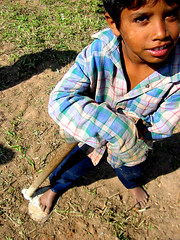 7-year old José Roberto was so happy to hear about Hummingbird coming to his community that he was more than willing to leave his kites behind to help out with the hard work of cleaning up an area for our visit. He was obviously pretty used to this kind of "job" as you will gather from the main photo of his foot 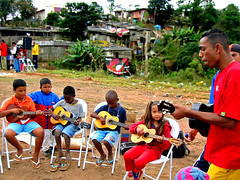 Bruno (right), is our youngest youth mentor and although only 18 years old he has already gained considerable experience teaching the children at Hummingbird on the instrument he himself has grown up with, the Brazilian cavaquinho, traditionally used in Samba. 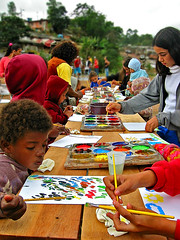 Under very simple conditions and a low-cost structure we were able to let the children “travel” to their own colourful dreamland. It wasn’t long before the children were entirely engulfed in the enchanted new world of Hummingbird, an unknown experience for many of them. 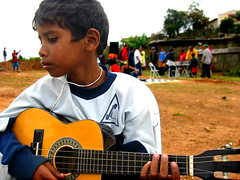 7-year old José Roberto exchanges his shovel for a cavaquinho and discovers the joys of music. 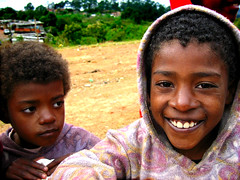 The children of Sitio Joaninha welcome Hummingbird to their community. Their expectations were as expected and many kids had already turned up early in the morning to wait for the Hummingbird Bus to arrive. 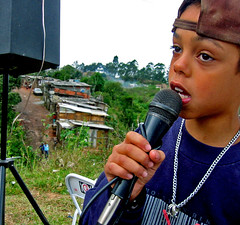 The fuel of our programme is the satisfaction seen on the faces of the children receiving our attention, like the boy above, who's self-esteem certainly rose during his solo performance as a young rapper. 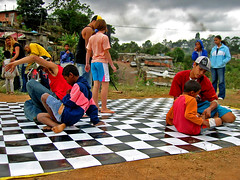 Here are some of our youth multipliers and scholarship holders who make up the AfroBreak dance group at Hummingbird. They are a pretty energetic group of youngsters who are more than dedicated to what they practice, which is mainly Break dancing, and love teaching others too. |
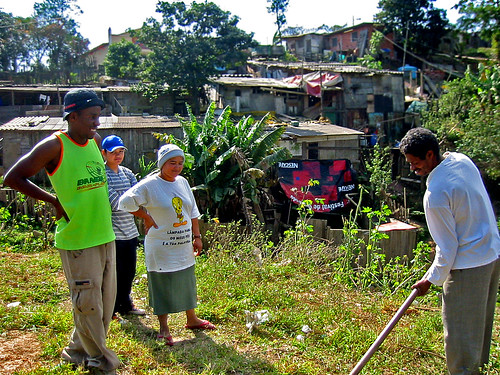
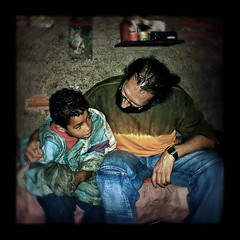
Here, one of our youth mentors, Davi (left) from the Banda Beija-Flor, discusses their new proposal with inhabitants of the area, who have gathered to clear an open piece of land to facilitate our activites there.
Many of the children who live here have a long way to walk to reach school, as there is no public transport. The tendency is therefore not to go, especially during the rainy or colder seasons. Very few have the willpower or even the means of getting to Hummingbird to participate in all the good things we have to offer in our Street Migration Prevention Programme, although there are some who do.
This is the main reason for us to bring Hummingbird to the kids. If we can manage to finance a more permanent solution we will be able to continue with a variety of activities throughout the entire year and not just during the school holiday season as is this experience.
posted by CARF Brazil @ 15:27
2 comments




 SlideShow:
























2 Comments:
It is easy to fall in love with a hermes bag . Who wouldn’t? hermes wallets has the exact amount of color dash and pluckiness to go with the overall look. However it is made, a hermes constance can look the occasion. There is always a bag for every event and for your mood swings.
lida helps to loose weight. Presently there are a lot of weights beating techniques which are accessible in the marketplace.. People may even ensure about diverse organizations which provide you with the weight beating techniques. lida daidaihua is one of organizations which provide people with lots of weight reduce steps and tips. One of such web site which provides daidaihua products is lose weight with. lida slimming has got a special type of packing inside in order to make customers differentiate between their products. If some one needs to identify regarding the slimming capsule beating techniques and devices, then they can verify from our site of slimming capsules .
Owning Chanel bags are often a sign that a woman has exquisite taste in fashion and is aware of the latest trends in fashion. Not only does Chanel bag represent that, these fashion accessories also bear the hallmark of long lasting quality and design excellence, with owners swearing on their lives that the Chanel Wallet can stand the test of time and extensive use. The best material go into the production of Chanel handbags and handbags, and the material themselves have to pass stringent quality tests to ensure that they are suitable for making these women's accessories.
Tiffany jewellery has become so ubiquitous in the jewelry field that many people know they're receiving Tiffany rings just by the color of the jewelry's box silver rings , a registered trademark. Today, many people are also being introduced to Tiffany earrings through the company's extensive sterling silver jewelry line.
脚やせエステ茨城
脚やせエステ新宿
脚やせエステ三重
脚やせエステ松山
脱毛 高崎
脱毛 北千住
脱毛 豊田
脱毛 岡山
フェイシャルエステ札幌
フェイシャルエステ埼玉
フェイシャルエステ中野・杉並
フェイシャルエステ愛知
フェイシャルエステ岡山
フェイシャルエステ久留米
エステ体験 所沢
エステ体験 恵比寿
エステ体験 福井
エステ体験 天王寺
エステ体験 福岡
水戸 エステ
千葉市 エステ
上野 エステ
青葉台 エステ
富山 エステ
梅田 エステ
橿原 エステ
熊本 エステ
メンズエステ 千葉
メンズエステ 三重
メンズエステ 大分
Post a Comment
<< Home